
Hi friends, the more I think about vocation, the more it changes the way I look at what’s going on in our world. So I’ve got something a bit different for you today. From time to time, I’ll be sharing something a bit more in depth about this interesting interplay between politics, culture and purpose. But I need your help. Please could you help me out by letting me know what you think in the comments, and whether you’d prefer these articles kept in the substack and out of your inbox. 🙏

“The era we have entered is not one in which technology will make everything easier. But rather every thing more complex.”
—Robert Greene, Mastery
We thought modern life would make things easier; giving us more time to play and relax. But really, it’s mostly just made life busier and more complex.
And life is really complicated.
It would be nice if our shared life together could be all organised under a single definable rubric: something like ‘live and let live’. Ah, the libertarian dream! Wouldn’t that be nice? And it is nice, and it does work… to an extent.
But alas, it’s not so.
The reality is, life is complicated. And living life together in a society means that even if we have lots in common we will still find ourselves dealing with issues that involve the collision of irreconcilable, conflicting rights, values and preferences.
One person wants to help trans men to live into their gender identity. Another wants women to have a right to sex-specific spaces where they can feel safe.
One person wants to say ‘my body my choice’ when it comes to abortion. Another wants to live in a society where life is sacred and to fight for the life of the most vulnerable.
The desire to parse problems like these through a single, easily definable rubric is probably innate in all of us. But a simple look at the hot issues of our day will show you how impossible this is, and how inadequate the libertarian ethic is in responding to these issues.
They are not issues about right and wrong. They are, more often than not, issues of competing legitimate values.

The trans example above is a locus point where women’s rights clash with trans rights. Or, if you prefer, it’s about the clash of gender ideology with biological reality.
The abortion issue, at its root, is a clash between the rights of a woman to make choices about her body with the value that we should not murder.
Whether you believe one side is stupid or not, and simply dismiss their competing value, you still do not get to choose whether it is solvable by the single libertarian rubric: ‘live and let live’.
That will not do. The rights of the individuals are clashing against each other.
The good news is, that there are ways to solve these problems, but they are complicated, and nuanced and difficult to communicate,
and crucially,
it’s probably not your job to solve them.
Am I right? Of course I’m right.
Unless you are one of very few who are uniquely called to delve into a single political issue, this is not your calling in life. You’re interested in it, yes. It matters to you, yes. You get really angry and heated about it, yes. But is it your job, your passion, your life’s task to solve?
Is this what you were born for?
I write about this only because it is my journey. Over many years, I have let my natural curiosity to learn and write and teach and solve problems lead me astray. I started thinking that it’s my job—no, my duty—to start speaking out about these political issues. To fix other people’s wrongness.
As embarrassing as it is to write, that’s what was going on under the surface I think.
But it’s not my calling.
And something tells me that this is not just my story. That we are all having our calling hijacked.
I am recognising now that these issues gain so much attention precisely because they are difficult to solve/put to rest. The rage-economics of social media are engineering our public conversations to guide us to spend our energy specifically in the areas of our shared life together where there is greatest, irreconcilable philosophical conflict.
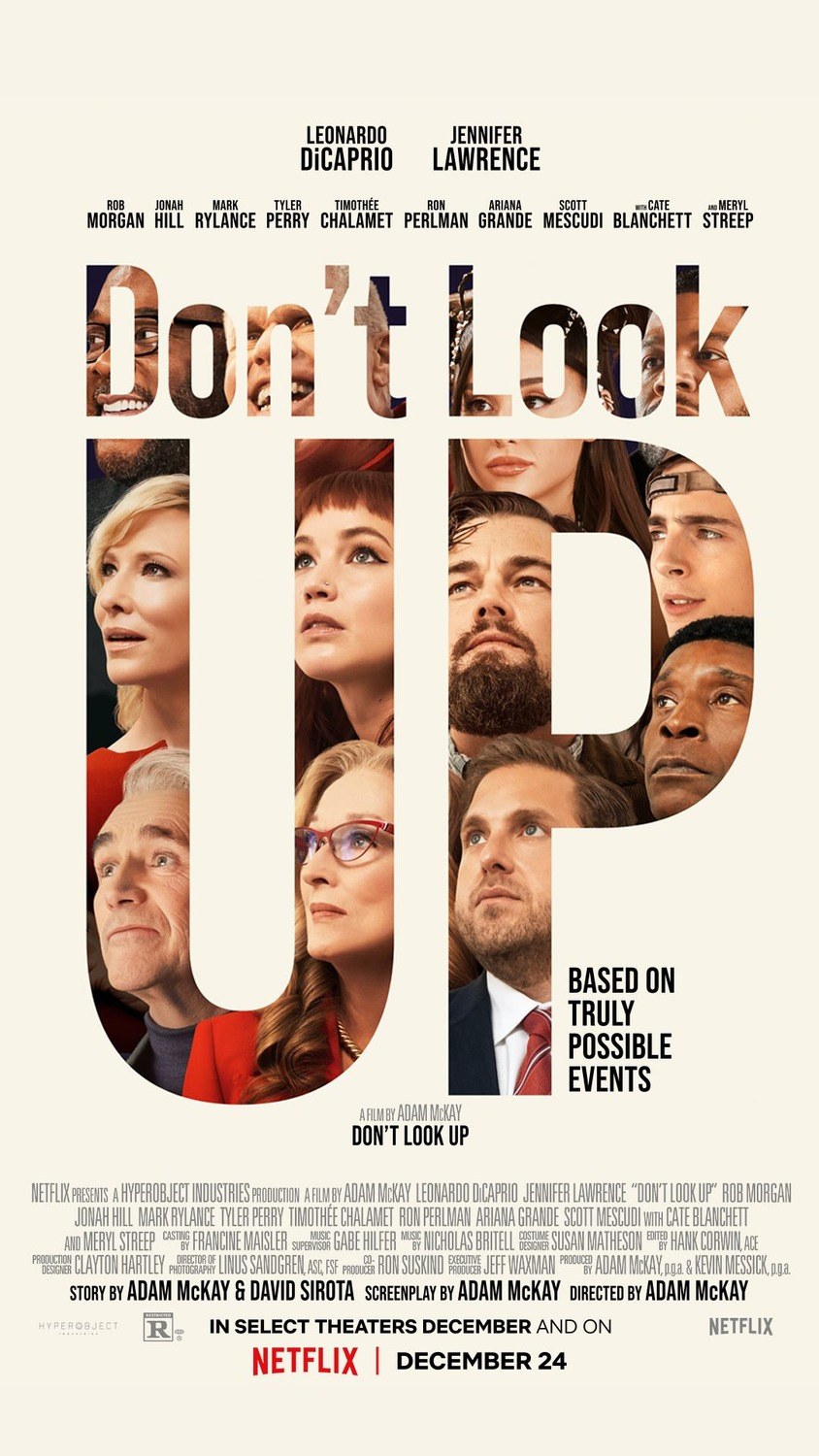
The recent film ‘Don’t Look Up’ is a funny, yet powerful example of how communication breakdown is the true enemy of humanity.
As we watch the cycles of division deepen, and as our expectations of political decorum becomes increasingly defined by extremist, cult-like fanaticism on all sides, what do we have to show for it?
What do you have to show for it?
The truth is, we are being conscripted against our conscious will into the culture wars and, in the process, leaving behind a vision that honours the unique potential of each person.
And sure, we’re adults, maybe we can go off and get a little perspective. Spend some time away from our fears that the world is going to hell. But what about the young ones? What if our teenagers, powerless to raise a comparison against it, are being formed so that all they’ve ever known is the culture warrior mindset?
Like us, they are addicted to the outrage. Enthralled by it. Would you blame them? How could they resist?
Even in their education, they are being encouraged to see themselves as warriors on the side of justice, rather than seekers on a path to truth and growth. At best it replaces a unique sense of calling to a specific purpose with a generalised activist identity that is far less fulfilling.
Maybe it’s time to hit pause, and consider what we might be losing here.
Until we get wise about the complex, competing and convoluted nature of these discussions and let it humble us, we will stride blindly into them with righteous zeal, perfectly embodying that famous line from John Stuart Mill:
He who knows only his side of the argument knows little of that.
Ask yourself, why has this not been solved yet? Ask yourself, could it be that this issue is not about right and wrong, but about legitimately competing values? What are those opposing values that should not be dismissed?
If we hope to reclaim a form of identity that values the unique calling and potential of each individual, we must be awake to the nature of these problems as centres of conflicting rights if:
we are ever to make real progress on them.
we are ever going to place them in healthy perspective and ensure we don’t witter our lives away on impotent debates and
we hope to stop marginal topics from distracting us from our main calling.
It’s time to acknowledge the complexity and to admit that you can’t do it all.
It’s time to win back the agenda from the algorithms.
It’s time to follow your passion and not your fear.
Godspeed,
T Mo