HI FRIENDS
My application for a Graphic Design degree was a disaster. I had no relevant A-Levels, no Art Foundation diploma (an entry requirement) and I had no portfolio of past work to show. To top it all off, my notice of interview went to the wrong address, so my first communication from the University was an e-mail telling me I had missed my interview and they had rescheduled one for a weeks time. More than that, there was an interview task!
I had a week to create a portfolio, complete an interview project, prepare for the interview, oh… and gain an Art Foundation Diploma.
It was not looking good. So I called my Dad. Staring down the barrel of certain failure, I was desperate for his permission to quit and find an easier goal. Instead he gave me the best, most terrible advice I have ever received.
He said “give it your all”.
I cried.
He wasn’t just asking me to fail. He was asking me to fail, with my heart on my sleeve, showing them exactly how much I wanted it.
It’s scary to admit to ourselves what we want to pursue. We know that if we care about something deeply, then it makes us vulnerable. Vulnerable to dissappointment, embarassment or shame. I was certain that I would fail to get in, and have wasted my time caring about this thing.
Of course, what I didn’t expect was that I got in. I was accepted!
I learned that people want passion, not perfection.
It’s hard to summarise how much this experience changed me. I learned a new way of being in the world. I learned that people want passion, not perfection. I discovered a joy and freedom that comes from living life deeply, which is far more resilient and meaningful and nourishing than the meagre safety found in my private, low-grade cynicism that asks nothing of me.
So, here’s to passion over perfection.
And here’s to risking it, even when it hurts! 🍻🥂
Godspeed,
T Mo
EXERCISE:
FEAR SETTING
What is it?
Fear setting is a writing exercise based on Stoic Philosophy from Tim Ferris. It helps you to gain clarity and confidence by realistically evaluating your fears. Crucially, it requires you to weigh the potential risks of action against the risks of inaction, in order to motivate you to take uncomfortable action.
Step 1 “What if I…?”
Define: the worst things that could happen.
Prevent: What could I do to stop or decrease the likelihood of these things happening?
Repair: If they happened, what could you do to undo the damage, even a little bit?
What might be the benefits of an attempt or partial success?
We are being realistic by playing up the fears and taking a conservative look at the up side.
Cost of inaction?
If I avoid this action/decision, what might my life look like? We must also leverage the fear of inaction to motivate us and gain a balanced view.
in 6 Months…
in 1 Year…
in 3 Years…
“Easy choices, hard life. Hard choices, easy life.” — Jerzy Gregorek
This video is a great example of how Matt uses a simplified version of Fear Setting, using very helpful real life examples.
My experience
I have found this exercise to be very helpful. I never really doubted that it would be useful, but even when I was starting with smaller fears/decisions that I didn’t really feel a pressing need to sort out, it still managed to deliver the goods. I still found it revealing things that I hadn’t considered before and which I didn’t expect.
So it’s a thumbs up from me. I think it’s very useful, and particularly strong given it’s philosophical foundations are very well tested.
One thing that is missing though, is a simple “decision” question at the end for helping to make your choice. It’s not much use having to remember what decision you felt was best in hindsight when you come back to the task later. So in my template, I’ve added this to the end.
I am left with a lingering question though. When is it best to use this exercise? What sorts of fears shall we put through it? As it’s quite difficult to define, I think that a regular quarterly rythmn could be the best approach. What do you think? How would you use it? Please leave a comment with your thoughts on this.
BRENÉ BROWN ON COURAGE
Daring is not saying, “I’m willing to risk failure.” Daring is saying, “I know I will eventually fail and I’m still all in.”
Courage is like—it’s a habitus, a habit, a virtue: You get it by courageous acts. It’s like you learn to swim by swimming. You learn courage by couraging.
We cannot selectively numb emotions, when we numb the painful emotions, we also numb the positive emotions.
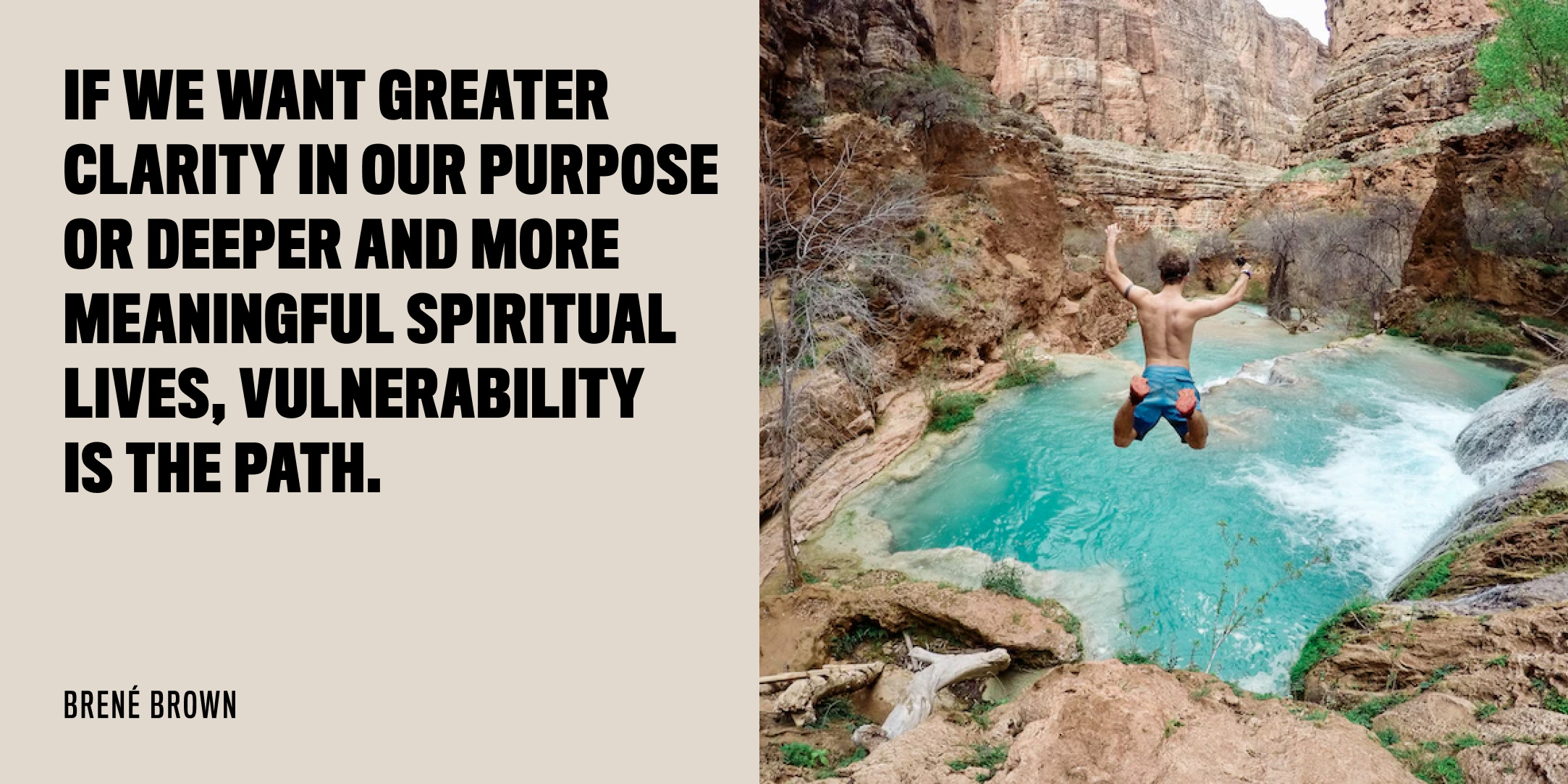
If we want greater clarity in our purpose or deeper and more meaningful spiritual lives, vulnerability is the path.
To live with courage, purpose, and connection - to be the person whom we long to be - we must again be vulnerable. We must show up, and let ourselves be seen.