
BEFORE WE BEGIN
I thought you should know, on account of the sheer irony, that I listened to this book while doing countless cleaning and DIY tasks, juggling parenting duties and recording notes in my phone. During the writing of this review, I got lost down the following research rabbit holes:
Keyboard shortcuts for using Notion
Countless GoodReads quotes
Buying a t-shirt from The Quiet Life
How to sync my Music Library on a broken Apple Music App (!)
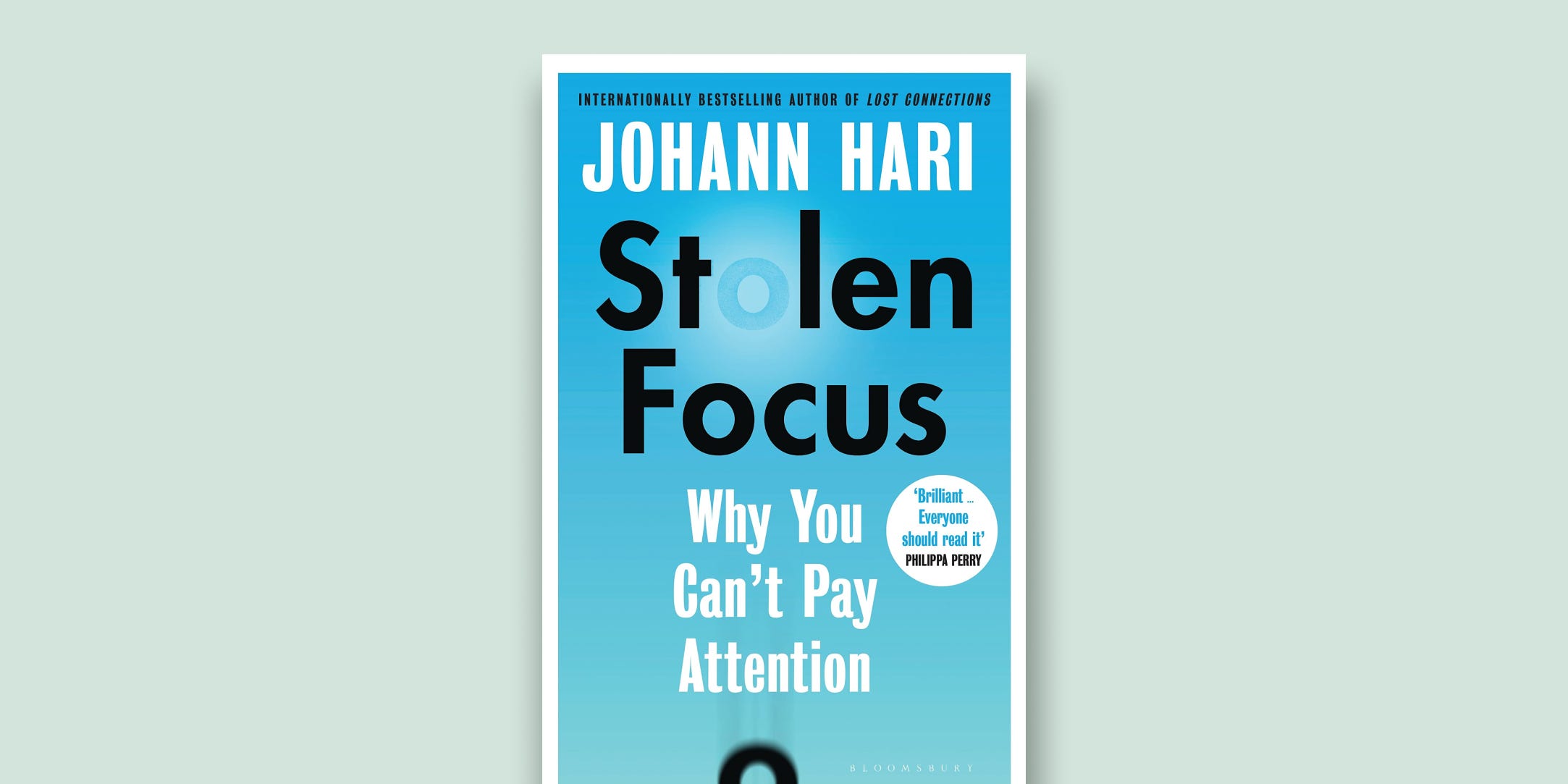
Stolen Focus
In this book, Hari shows how changes in lifestyle, technology and culture are having the combined effect of collapsing our attention.
He manages to put personal anecdotes and hard data to an experience which many of us will recognise: the gradual splitting and depletion of our ability and desire to focus. But what he also captures here, especially through his personal journey, is the reality of why this matters.
The truth is that our attention is not something that we can afford to lose. It is the very source of our agency and wellbeing; it is, in fact, who we are and what makes up the experience of being us.
I don’t want to overstate the case, but I can’t imagine that we will have any hope of grasping and pursuing our calling in any real sense, if we cannot bear to spend time in reflection, or follow a train of thought without reaching for our phones before it arrives at the first station.
Our attention is the doorway to our spiritual life, and therefore our calling.
This is my first big takeway:
Hijacking our attention will sabotage our intention.
But what can we do about it?
Johann argues that we must counteract the mass distraction with both sustained political action and by pursuing sources of flow in our own lives.
It’s a really enjoyable book overall, but let’s take a look specifically at what lessons we can draw from it about following our calling.
I spotted 4 big takeaways. The first we have just covered.
Hijacking our attention will sabotage our intention.
To reconnect with ourselves and our calling, we need to slow down.
We can’t just remove distractions, we have to fill our lives with flow.
Society has a role to play in our individual calling.
2. To reconnect with ourselves and our calling, we need to slow down
The list of causes that Johann delves into is quite overwhelming when all put together: sleep deprivation, invasive technology, addictive social media, processed food, parenting styles, pollution, free-market capitalism and others. But he sums up the point here:
There are certain things that you need to protect your attention from because they will sicken or stunt it. Too much speed, too much switching, too much stimuli, intrusive technology designed to hack and hook you, stress, exhaustion, processed food pumped with dyes that will amp you up, polluted air.
And maybe at the heart of them is the sense that society is speeding up.
“There’s this thing about speed that feels great…. Part of why we feel absorbed in this is that it’s awesome, right? You get to feel that you are connected to the whole world, and you feel that anything that happens on the topic, you can find out about it and learn about it.” But we told ourselves we could have a massive expansion in the amount of information we are exposed to, and the speed at which it hits us, with no costs. This is a delusion: “It becomes exhausting.” More importantly, Sune said, “what we are sacrificing is depth in all sorts of dimensions…. Depth takes time. And depth takes reflection. If you have to keep up with everything and send emails all the time, there’s no time to reach depth.”
The reality is, we need to slow down.
Slowing down, while painful at first, limits distraction and quiets the mind.
If we slow down, it will repair our attention and reconnect us with our own life.
“If you go too fast, you overload your abilities and they degrade. But when you practice moving at a speed that is compatible with human nature — and you build that into your daily life — you begin to train your attention and focus. Slowness nurtures attention, and speed shatters it.”
Slowing down also means giving up on the myth of multi-tasking.
“The average office worker now spends 40 percent of their work time wrongly believing they are ‘multitasking’—which means they are incurring all these costs for their attention and focus. In fact, uninterrupted time is becoming rare. One study found that most of us working in offices never get a whole hour uninterrupted in a normal day.”
We aren’t just distracted, we even develop a desire to become distracted:
if you have spent long enough being interrupted in your daily life, you will start to interrupt yourself even when you are set free from all these external interruptions. … I would never wait two minutes in a store without looking at my phone or reading a book. The idea of not filling every minute with stimulation panicked me, and I found it weird when I saw other people not doing it.
But if we slow down, we will start to recover what Hari calls our “daylight” attention, the kind of broad, big-picture attention that plays a vital role when thinking about our calling.
3. We can’t just remove distractions, we have to fill our lives with flow.
Simply removing distractions is not enough. It leaves us with craving, and maybe feeling guilty too.
“To have a good life, it is not enough to remove what is wrong with it,” Mihaly has explained. “We also need a positive goal; otherwise why keep going?” In our normal lives, many of us try to seek relief from distraction simply by crashing—we try to recover from a day of overload by collapsing in front of the TV. But if you only break away from distraction into rest—if you don’t replace it with a positive goal you are striving toward—you will always be pulled back to distraction sooner or later. The more powerful path out of distraction is to find your flow.”
Flow is a term borrowed from psychologist Mihály Csíkszentmihályi, referring to a state of consciousness where people typically experience deep enjoyment, creativity, and a total involvement with life. Through his work, Mihály spotted that what makes an experience genuinely satisfying is being in the state of flow.
“Enjoyment appears at the boundary between boredom and anxiety, when the challenges are just balanced with the person's capacity to act.”
—Mihaly Csikszentmihalyi
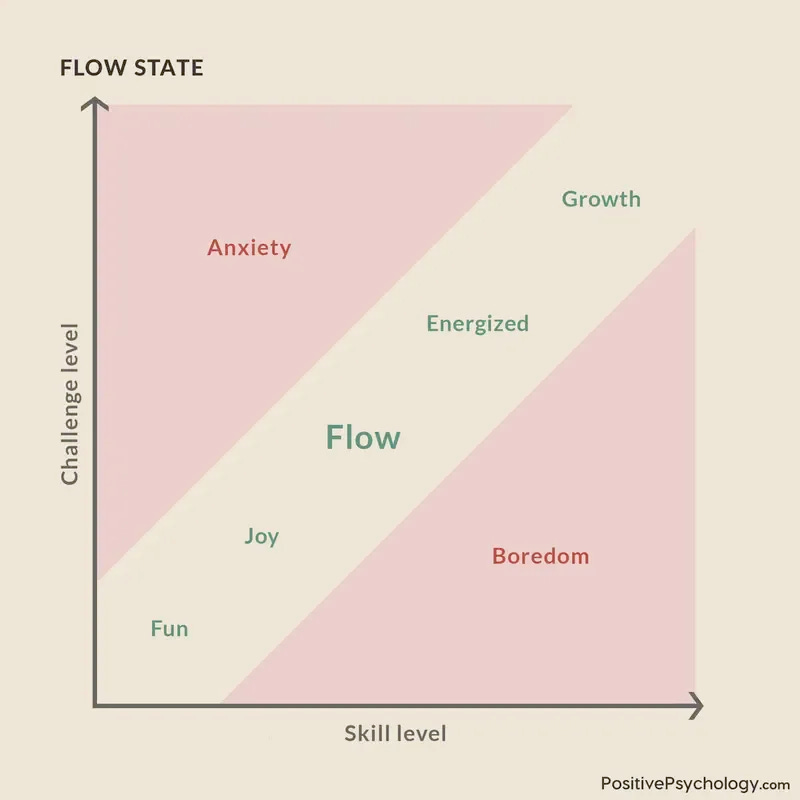
To find out more about what flow is, and the background behind the idea, check out this post here and this article from Positive Psychology.
Hari says that:
“To find flow, you need to choose one single goal; make sure your goal is meaningful to you; and try to push yourself to the edge of your abilities. Once you have created these conditions, and you hit flow, you can recognize it because it’s a distinctive mental state. You feel you are purely present in the moment. You experience a loss of self-consciousness. In this state it’s like your ego has vanished and you have merged with the task—like you are the rock you are climbing.”
Seeking out flow looks like:
Getting into the zone with physical practices like yoga, Jiu Jitsu, or for me it would be a good football match.
Losing yourself in absorbing creative tasks like painting, writing or reading.
Mental practices like worship, prayer and meditation.
Anything that requires monotasking, with just the right amount of challenge.
“Fragmentation makes you smaller, shallower, angrier. Flow makes you bigger, deeper, calmer. Fragmentation shrinks us. Flow expands us.”
And if you think back through experiences in your life where you have experienced flow, it can be a great sign that you are where you’re supposed to be.
“The best experiences in life that I had, when I thought back on it, came from times when I had been in the mountains climbing…climbing and doing something really kind of difficult and dangerous—but within the scope of what I could do.” When you are approaching death, I thought, you won’t think about your reinforcements—the likes and retweets—you’ll think about your moments of flow.”
When have you experienced this kind of deep, fully immersive and energising focus? What sorts of activities were you doing? How could you design a life with more of this kind of work in it?
4. Society has a role to play in our individual calling
Johann makes a point to show how it is an unfair and losing strategy for the burden of strengthening our attention to fall on individuals. The combined cultural forces levied against us, are so strong that we need combined political action to help.
“Democracy requires the ability of a population to pay attention long enough to identify real problems, distinguish them from fantasies, come up with solutions, and hold their leaders accountable if they fail to deliver them.”
“The truth is that you are living in a system that is pouring acid on your attention every day, and then you are being told to blame yourself and to fiddle with your own habits while the world’s attention burns.”
Often when we think of ‘discovering our calling’, we can fall into the trap of thinking that it’s an exclusively individualistic idea. Selfish even, or self-indulgent. A kind of luxury belief, reserved for the privileged who can afford to pursue their niche preferences. And it’s easy to see why, because finding a meaningful life necessarily includes and embraces the uniqueness of each person’s circumstances, character and qualities.
But, and this is a crucial ‘but’, there is no ‘calling’ which would lead you to a more wasted life. Or a more selfish, destructive life. Our calling always seems to have the same pattern: recognising our powers and turning them toward the service of others. People who have found their purpose, are powerful and productive members of society—not least because they are actually happy.
This is also a good reminder that in the journey to live a life of purpose, we need the help and support of mentors, teachers, friends, pastors and neighbours:
to reflect back to us our character
to encourage us when we’re on the right track
to enjoy and celebrate our gifts when they are offered
And, of course, this is a responsibility that we each have to one another. To be part of churches, communities and countries that, at the very least, don’t distract each other from a fulfilling life and, at best, help each other find it. For all of our sakes.
Godspeed,
TMo