

I don’t know anything about the books; but I have most definitely been swept up in the sandstorm of love around the latest Dune films along with the rest of the world.
Me and my wife saw the first film when it arrived in cinemas and were lucky enough to go in with no expectations and find ourselves sucked into this whole new world of mystery and mayhem. Ever since, we have been eagerly awaiting the release of the second film and angling for baby sitters so we could go see it in the cinema.
It was during a re-watch of the first film that it dawned on me. This story is all about this young man, Paul Atreides, discovering his calling.
We follow along with Paul through all of his questions:
What is his destiny?
To what extent is his calling authentic?
What does it mean for him to step into his power?
And what does it look like to abuse that power?
I think that it’s this journey which ultimately gives the film it’s magic. Without these questions percolating through the story, it would certainly be a spectacle but it would not be captivating the minds of a generation like it is.
So let’s do it.
Let’s look at our calling according to Dune.
🚨🚨🚨
If you are looking for a spoiler alert, this is it!
From here on, there will be minor spoilers for the first and second film.
🚨🚨🚨
Paul Atreides has dreams
Dune one opens with this defining line, warbled through the voice of the Sarduakar:
Villeneuve wants to make it clear that dreams are the central theme of the film.
As Paul begins to have unusual dreams that seem to be guiding him, blurring the line between dream and premonition, things start to change. At first he hides them. Lying to his mother.
Later, as Paul confides in his closest friend Duncan about his strange premonitions, he is told that “dreams are nothing.” While his Mother on the other hand takes an active interest, encouraging him to take them seriously. There is an interesting exchange before he is presented before the reverend mother to be tested. She says “she wants to know about your dreams”, to which Paul replies, “Why does she want to know about my dreams?”.
Dune wants us to be investigating this connection between dreams and Paul’s future. They are more than just imagination, they really are messages from the deep.
Later, we find hints that Paul has come to see this too. In his conversation with the skeptical Liet Kynes, he convinces her by speaking to her things that he should not know: “I know you loved a Fremen warrior and lost him in battle. I know you walk in two worlds and are known by many names. I’ve seen your dream.”
Paul’s dreams only become more vivid and frequent as he follows his destiny.
All this talk of dreams and the desert and prophesies can’t help but recall that ancient story of Joseph and his coat. And in that story too, we are warned to take our dreams seriously, but that how we respond to them can get us into whole heaps of trouble as well as unlock our destiny.
Paul Atreides is called to greatness
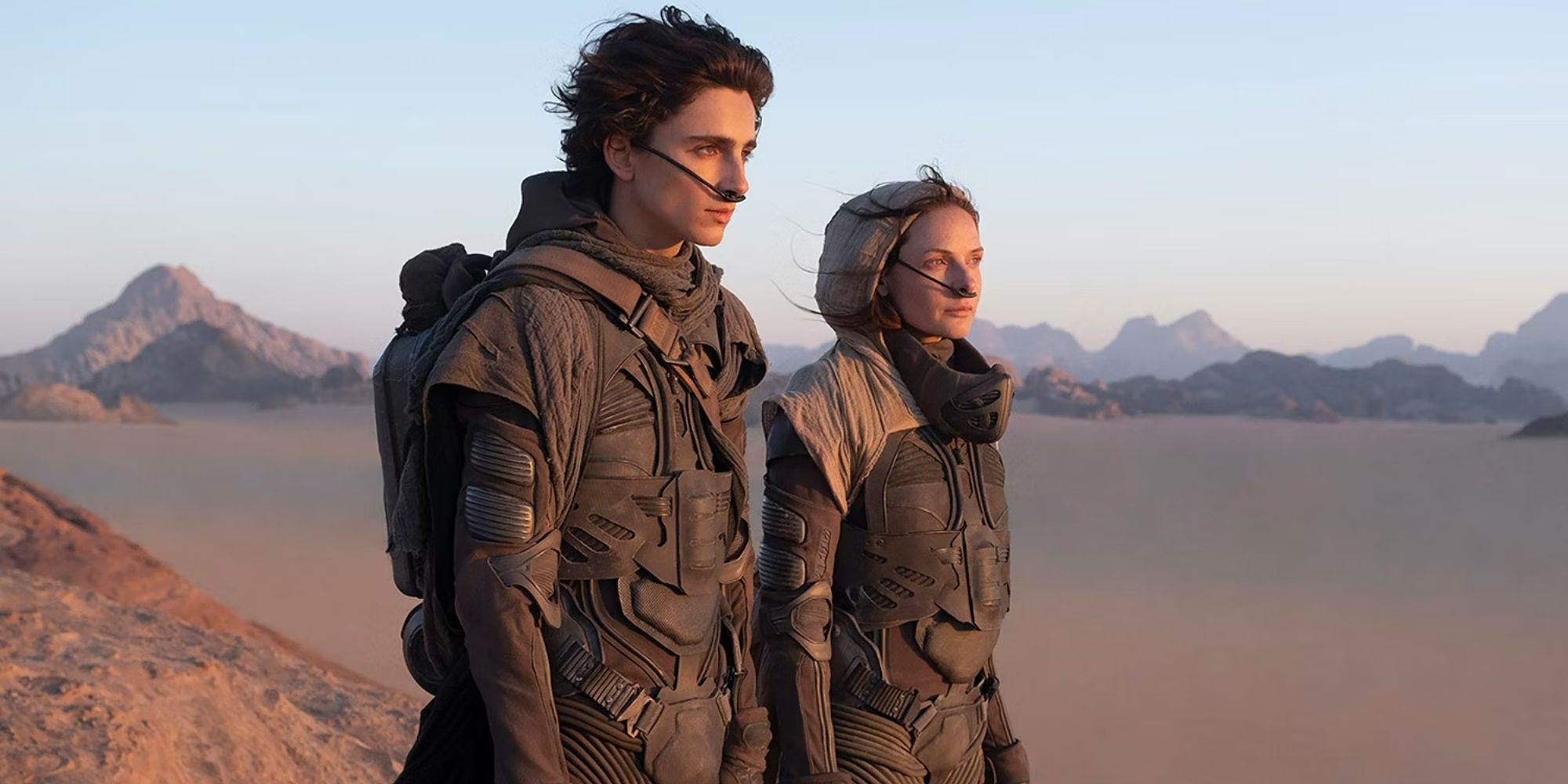
To say that Paul Atreides has a calling on his life is an understatement.
What gradually unfolds in Dune takes the idea of calling and ramps it up to the max. Paul is not only a Duke, heir to the esteemed House Atreides who rule part of the galaxy, he is son of a Bene Gesserit mother who, it turns out have marked him out as a candidate to become the Kwisatz Haderach. The long-awaited result of a secret centuries-long genetics program designed to create a super-being capable of ruling over the galaxy using unprecedented powers of foresight. Um, wow.
Talk about tiger mum.
Seriously though, despite the crazy high stakes, somehow we are taken on Paul’s journey with him in a way that we can understand. We find ourselves trying to answer the same impossible question that he is: “How much of this is my real calling and what is manufactured? How much is what Paul really wants and how much is manipulated?”
The question we’re all asking is one that Paul asks his father:
Paul: “What if I’m not?”
Leto: “Not what.”
Paul: “The future of house Atreides.”
But there are hints that Paul really is destined for greatness, and that it’s not merely the contrivances of his pushy mother. His dreams are like prophesies. And it seems like he is being called to play a big role, seemingly by something greater than himself.
The reverend mother puts it this way: “a path has been laid. Let's hope he doesn't squander it.”
By the end of the first film, after the tragedy of losing his father, you can hear how this path is no longer something forced upon him but something he has claimed for himself:
“The emperor sent us here. And my father came. Not for spice. Not for the riches. But for the strength of your people. My road leads into the desert. I can see it. If you’ll have us, we will come.”
Listen to that: “…my road leads into the desert. I can see it.”
That’s so badass. Now even if it’s not on such an epic scale, I think that deep down it’s this kind of vision and confidence that we all love and long to discover for ourselves.
Paul Atreides must continue a legacy
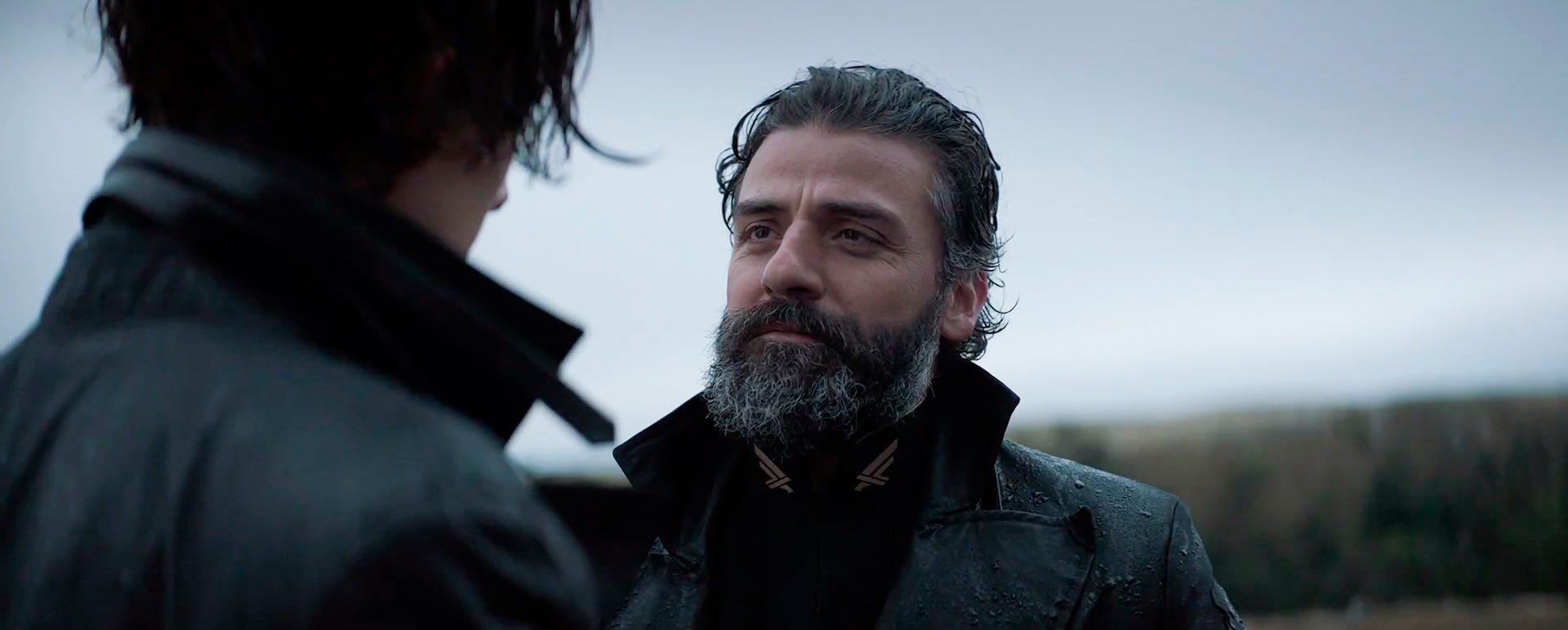
What does it mean to fulfill your unique purpose when you are also expected to continue in a family legacy? Or to inherit a family identity? This is an age-old tension that must be very tricky for parents to navigate with gentleness.
It was only on a second viewing that I noticed what a perfect example Paul’s father Duke Leto provides of how a parent can navigate this complex situation with their child:
“Your grandfather said that a great man doesn’t seek to lead. They are called to it. And they answer. But if you don’t answer the call, you’ll still be the only thing I ever needed you to be: my son.”
Leto is winning in the dad department here.
Somehow, in Paul’s story we also see a great example of how these two things can come together. That our calling is about embracing who we are as an individual, but who we are is in no small measure given to us in our family of origin.
In this story there is no conflict between Paul’s identity as Duke of the royal house Atreides, and with the specific purpose he must fulfill. It is simply integrated as another part of who he is. This is also demonstrated symbolically to the audience through the use of the Atreides house mascot: the matador.
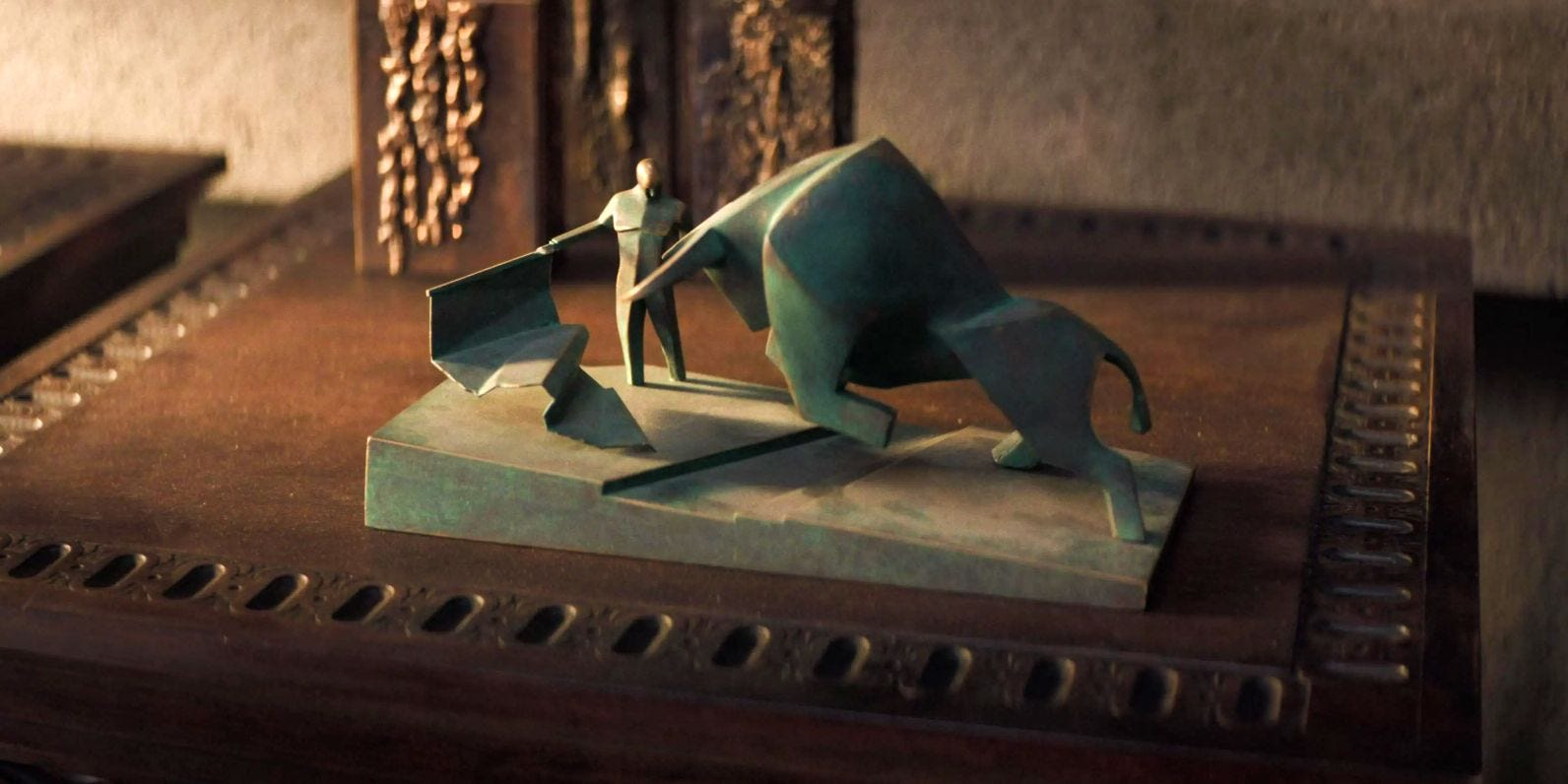
This symbol captures the courageous spirit of his grandfather, and tells us so much about what it means to be an Atreides: they prevail by courage and cunning, rather than by might. This motif now works to foreshadow the manner in which Paul will triumph, and it tells us (and Paul) when he is on the right track.
I wonder if you have things like this in your own family or group of some kind? We often spontaneously create symbols like this to act as reminders of what our sacred values are, things which are usually kept unspoken. They can then keep us on track when we’re going astray. In a moment of cowardice, Paul could say “that’s just not the Atreides way.” The Atreides way is like the matador.
On a wider note, we are shown through Paul’s family that following our calling is just as much about accepting the responsibilities offered to us and responding well to the opportunities that come our way, as it is about going after our own individual desires.
Paul Atreides must die
Another theme that Dune brings out in Paul’s story is what he must sacrifice to follow his path.
As he is fleeing into the desert, one of Paul’s visions tells him “Paul Atreides must die for Kwisatz Haderach to rise. When you take a life, you take your own.” A hint that he must leave a part of himself behind.
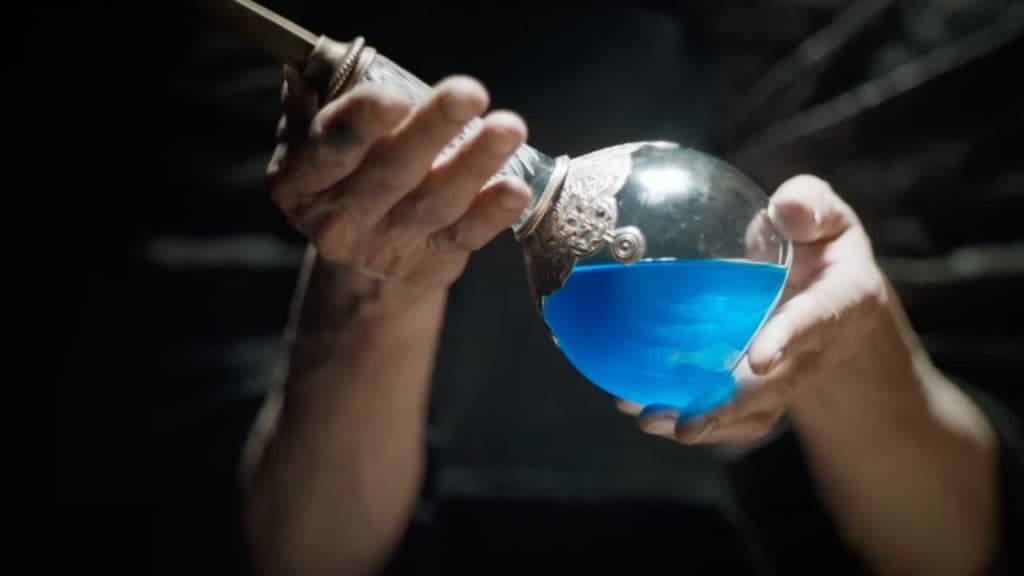
Paul has to face this challenge at several points, including later where he must face certain death by drinking the “water of life”, a poison derived from young sandworm bile which no man has ever drunk before and lived. He knows that he needs to face his fears and go through this in order to survive and save Arrakis and himself.
This theme of the story rings so true, doesn’t it?
We all know instinctively that death to self is required on the journey to follow our calling. It’s that ancient pattern. We have to leave behind limiting versions of ourselves like seeds that must be broken open to allow a tree to grow. If we want to give our lives to serve something greater than ourselves, then it will cost all of us. It will stretch us beyond our current limits.
But for me personally, stepping away from the world of Dune for a moment, I think it’s important to mention that it’s only love which can truly sustain us on this journey. Sure we can throw ourselves into a big purpose and vision which will challenge and change us, but how can we know it won’t simply destroy us and corrupt us, unless our ultimate aim is to become love? Any other aim, however noble—whether it be self preservation, victory over oppression, or even achieving some new liberty—it will likely make you great, but it will surely make you a great monster in the end.
Paul Atreides must be humble
For those of us who haven’t read the books, it remains to be seen where Paul’s journey is going. And there are certainly hints that this is something of a cautionary tale that is unfolding.
But if it is a cautionary tale, one about how power corrupts even the best of us, or the destruction left in the wake of a messiah complex, it’s promising to be a sophisticated one. We’ve seen Paul wrestling at every step with the consequences of seizing power and how he can use it to serve others without being corrupted by it. I fear he will fail, and fail spectacularly.
The first two films have so far done a masterful job of seeding these very troubling questions into our psyche:
1. what will I do with my power?
And perhaps most hauntingly:
2. what will I not do with my power?
For on Paul’s journey to follow his ambition—his destiny, his desire, his calling—we see very quickly how the road to hell is paved with the best intentions. And we are left considering: what limits must I set on how I pursue my own ambitions?
I think we all intuitively resonate with the fraught nature of this dynamic, as it is one of the defining questions of our own lives: what will I do with my power? How can I ensure I will use it for good?
It’s good stuff! What do you like about it?
Godspeed,
T Mo